When I first started in digital marketing, our team posted a job opening for a UX/UI designer.
My first thought was: What does that even mean?
The digital marketing industry already has plenty of acronyms. Did we really need two more?
As it turns out, UX and UI are some of the most valuable disciplines in digital marketing because of the tangible business outcomes they can produce.
UX stands for User Experience, while UI stands for User Interface.
Although the two are closely related, they're not the same thing.
UX vs. UI: What's the difference?
User Experience (UX) focuses on how people interact with your website and how they feel while navigating it. Is it easy to find information? Can users complete important tasks without frustration? Does the experience guide them toward the next step?
User Interface (UI) focuses on the visual elements users interact with, including buttons, menus, layouts, forms, colors, typography, and other design components.
In simple terms:
UX is how the experience works.
UI is how the experience looks and feels.
Neither can operate effectively on its own.
Successful UX and UI improvements rely on user research, testing, and strong web analytics. After all, there's little value in redesigning a website if you can't measure whether those changes improved engagement, conversions, or customer satisfaction.
When done well, UX improvements can lead to:
Higher conversion rates
Increased lead generation
More engaged website visitors
Longer session durations
Lower bounce rates
Better customer satisfaction
Think about your own online behavior.
If you land on a website and can't find what you're looking for, struggle to navigate the menu, encounter a confusing form, or discover the site doesn't work well on mobile devices, you'll probably leave and visit a competitor instead.
Your website is the digital front door to your business. The experience customers have when they arrive can heavily influence whether they become a lead, make a purchase, or leave altogether.
To illustrate the impact UX can have, here are three real-world examples from my own experience.
Three UX improvements that delivered measurable business results
Sticky CTA buttons increased conversion rates nearly 5x
While leading digital marketing efforts for Oregon State University's College of Engineering, our team redesigned several academic program pages.
The redesign looked great. There was just one problem. Conversions dropped…significantly.
Without analytics, we might never have recognized the issue.
The data prompted us to test potential solutions. One of those solutions was simple: introducing sticky call-to-action (CTA) buttons that remained visible as users scrolled through program content.
The results were significant:
Average User Key Event Rate increased from 2.6% to 11.4%
Year-over-Year Key Event Rate increased from 8.7% to 11.4%
Total Year-over-Year Key Events increased by 35%

This wasn't a major redesign or a complete website overhaul. It was a relatively small UX improvement that made it easier for users to take action when they were ready.
That's the power of combining analytics, testing, and thoughtful user experience design.
Article redesign increased organic users by 56%
Nobody enjoys reading large blocks of text online.
Visitors tend to scan web content before deciding whether it's worth their attention. That's especially true on mobile devices.
When we evaluated our article templates, we identified several opportunities to improve readability and content discoverability.
The redesigned experience included:
Clear "Key Takeaways" sections at the beginning of articles
Better use of H2 and H3 headings
Improved content hierarchy and spacing
More descriptive titles
Stronger formatting for mobile users
Better meta descriptions

The result was a much more user-friendly reading experience.
Visitors could quickly understand what the article was about, jump to information that interested them most, and consume content more comfortably on any device.
Over the following year, alongside improved content distribution efforts, we saw significant growth across multiple traffic sources:
Organic traffic increased by 14%
Direct traffic increased by 84%
Social media traffic increased by 33%
Referral traffic increased by 36%
Good UX and SEO often go hand in hand. When content is easier for users to consume, it's often easier for search engines to understand and rank as well.
A better form experience increased leads by more than 20%
One of the highest ROI user experience improvements you can make is reducing friction in your lead generation process.
When I started at Oregon State's College of Engineering, the experience for requesting information about academic programs was far from ideal.
Prospective students encountered:
Multiple forms on the same page
Limited guidance about which form they should complete
Confusing navigation
Poor messaging around what would happen after submission
Redirects to pages that weren't relevant to their next steps
The experience created unnecessary friction for users who were already interested in learning more. We redesigned the process to be simpler, more intuitive, and more helpful.
The impact was immediate.
User Key Event Rate increased from 8.5% to 15%
Total leads increased by more than 20%
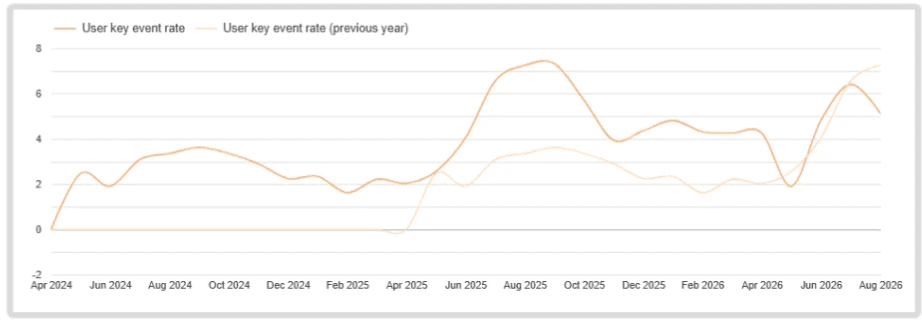
The lesson was straightforward. When you make it easier for people to become a lead, more people become leads.
Sometimes the biggest growth opportunities aren't about driving more traffic. They're about improving the experience for the visitors you already have.
Final thoughts
Many business owners think about marketing in terms of driving more website traffic.
And while attracting visitors is important, traffic alone doesn't generate revenue.
What happens after someone arrives on your website matters just as much.
You can spend thousands of dollars on advertising, SEO, social media, and content creation, but if your website creates frustration instead of confidence, you'll lose potential customers before they ever convert.
That's why UX should be viewed as a business investment, not a design exercise.
Great user experiences make it easier for prospects to find information, understand your value, trust your business, and take the next step.
The best part? Many high-impact UX improvements don't require a complete website redesign. Sometimes simple changes like improving navigation, simplifying forms, clarifying calls to action, or making content easier to read can produce meaningful improvements in conversion rates and lead generation.
If you're investing in digital marketing but aren't seeing the results you'd expect, it may be worth taking a closer look at the experience your website is delivering. Your customers already are.

